
Adding Thailand's fact-checking resources
Beyond the techniques in this article, Thailand's Anti-Fake News Center (antifakenewscenter.com) and Cofact (cofact.org) remain active fact-checking resources.
Communication technology is developing rapidly. Resulting in fake news and fake news, which is an international problem occurring around the world. Digital society has developed online communication channels to be easier to use. which is the cause of fake news. Fake news
From the beginning the general public was just the recipient of the message. But nowadays everyone can choose to be a media person. Therefore, online information that appears may lack fact-checking. Fake news, fake news, and inaccurate information have occurred. It affects and causes widespread damage to society

Sharing fake news, fake news, wrong information, information that lacks credibility or references is considered one of the 3 things that users of online media, especially social media, often forward or share on a regular basis. Most of the time, it is information that has content that arouses curiosity. Or bad news makes us feel like passing on information that is misunderstood by society. Whether it's about world medicine that can cure cancer. including various behaviors that helps bring about good things to matters of trade and sex that affect every circle of society
“...In the past, the mass media acted as a 'gatekeeper' who filtered news for the people. But today, anyone who is a media user can become a messenger himself. But there will be no one to act as the news gatekeeper. That is responsible for screening and considering the credibility of news..." Mr. Wasan Paileekli Safe and Creative Media Development Fund Manager
in the field Miss Suphinya Klangnarong Chairman of the Consumer Protection Working Group The National Newspaper Council said that “...The transition of mass media developed from broadcast media and print media. Entering the era of digital media and social media This has changed the role of the traditional mass media. Verification of content and news sources has changed. The audience has more channels to receive information. The production of information in various forms, including fake news, is therefore a global problem..."

Fake news. What is fake news?
- Deceptive headlines that make you click.Most of the time, words or phrases used in headlines are used to mislead people. Makes you look curious, invites you to follow, stimulates curiosity. Or to get people's attention to want to send or share information. The content may not be completely false. to look trustworthy And it can spread quickly on social media to get visitors to click on the desired link.
- Propaganda is a story that has been selected and created to mislead. Create both negative and positive bias. Most of the time, they create stories to hope for some kind of result. Especially hoping for political results that may mislead the public. Or you can like it.
- Satire/Parody is the creation of news to parody or satirize famous people for entertainment. Whether it is true or false, it is considered news that causes damage to that person. But it can attract the attention of website visitors. and can be forwarded or shared very well
- Presenting news in a casual manner.From time to time, journalists who are news gatekeepers may publish incomplete, missing or incorrect information. As a result, the news agency or the reporter cannot be trusted. This is because of the lack of detail in not checking all the facts. Mislead readers or viewers Even though the content of the news may not be completely false. But having missing or inaccurate information affects the perception of readers or viewers.
- Biased news Searching for certain information on social media. Can satisfy curiosity and help support the thoughts, beliefs, and biases of media users. It can be analyzed from the search terms of media users. As a result, the information displayed may be incomplete. It is information that appears biased. or information that responds to the thoughts of the searcher

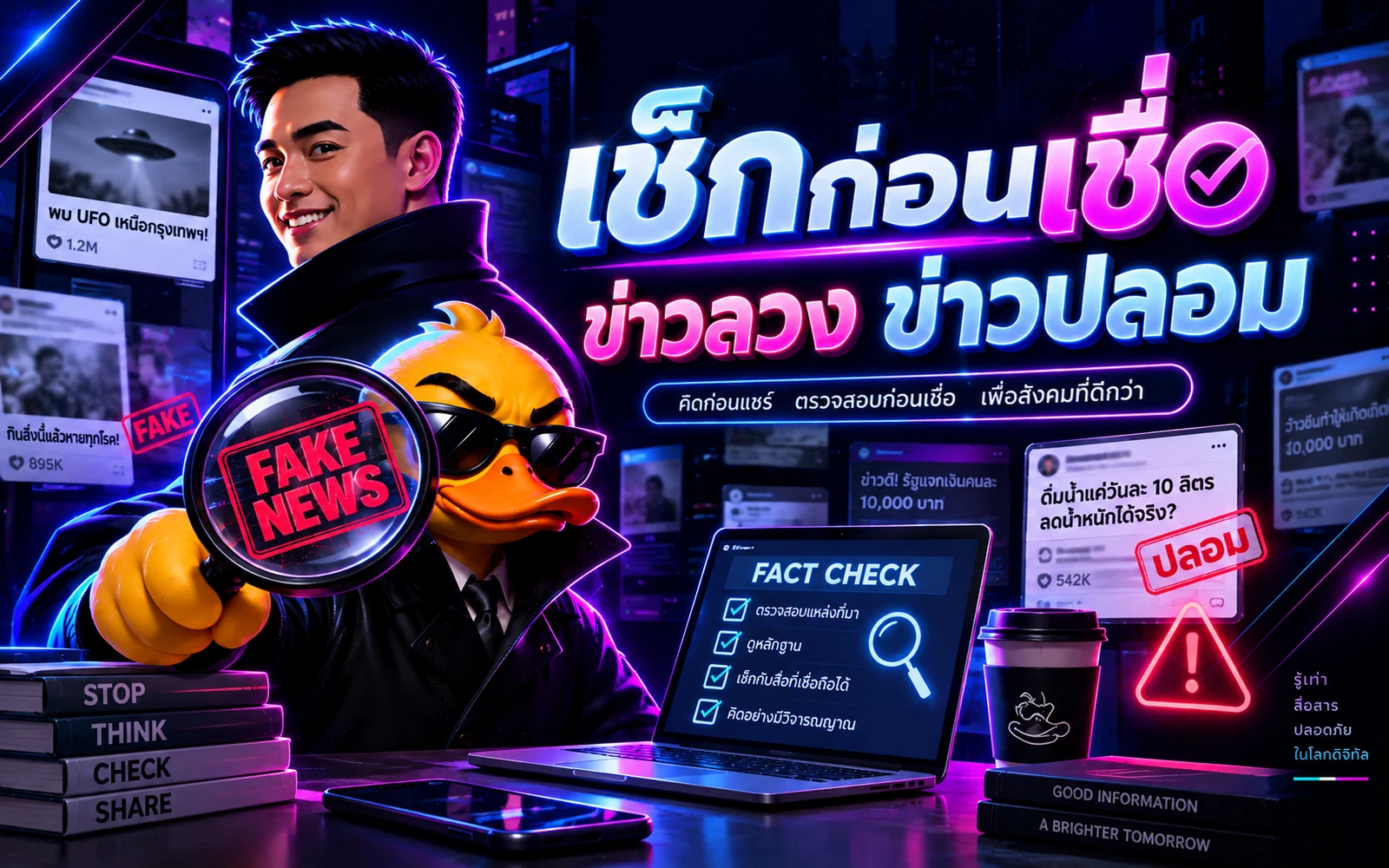
How to check for fake news
Collaboration to combat fake news should occur at every level of society. Security Department therefore would like to bring knowledge that will help promote everyone to have knowledge, understanding, and knowledge of mass media and digital media very well. In order to check which news is true What fake news can be done as follows?
- Are the links seen related to the content?Check the link or url of the website to see if it is relevant to the news content. Check the name of the website and the official link. whether it is an official website or a fake website Check out the other pages of the website: Organization Mission, Contact Address etc.
- Read the overall content Note the headline that looks flashy. and read the contents of the story Is it the same thing? How reliable is it?
- Get to know the author Find out if the author of the content is real. How reliable is it by reading the content or old articles of that author?
- Check the date of publication Posting old news may not be consistent with current events. But reposting old news with references to events close to the present may mislead readers.
- Check our biases Because personal beliefs may determine the news. If we think what direction the story will go? Fake news that appears according to your imagination can easily lead you to believe it.
- Ask someone knowledgeable if you are not sure.You should ask knowledgeable people or check with sources that present the facts. Or news presentations from reliable news agencies

Summary
Know this before sharing. When commenting on social media, you should check the news first. In order not to fall prey to fake news, fake news that is written to gain views.
Illustrations from the internet
Some information from the Children and Youth Media Institute
Interview by Mr. Wasan Pailikli, Manager of the Safe and Creative Media Development Fund
Miss Suphinya Klangnarong Chairman of the Consumer Protection Working Group National Newspaper Council
Sources
Information updated 24 September 2026.