

Key update: U=U
Medical evidence now confirms Undetectable = Untransmittable (U=U): someone living with HIV who takes antiretroviral therapy consistently to an undetectable viral load cannot sexually transmit the virus to a partner. People on consistent treatment can expect a life expectancy close to that of someone without HIV.
Today, most people living with HIV have similar health conditions to those without the virus. due to antiviral treatment That everyone has access to treatment according to their own health rights. Whether it is social security rights Civil servant rights or gold patent Infected people who have access to treatment can live their lives like people without HIV.
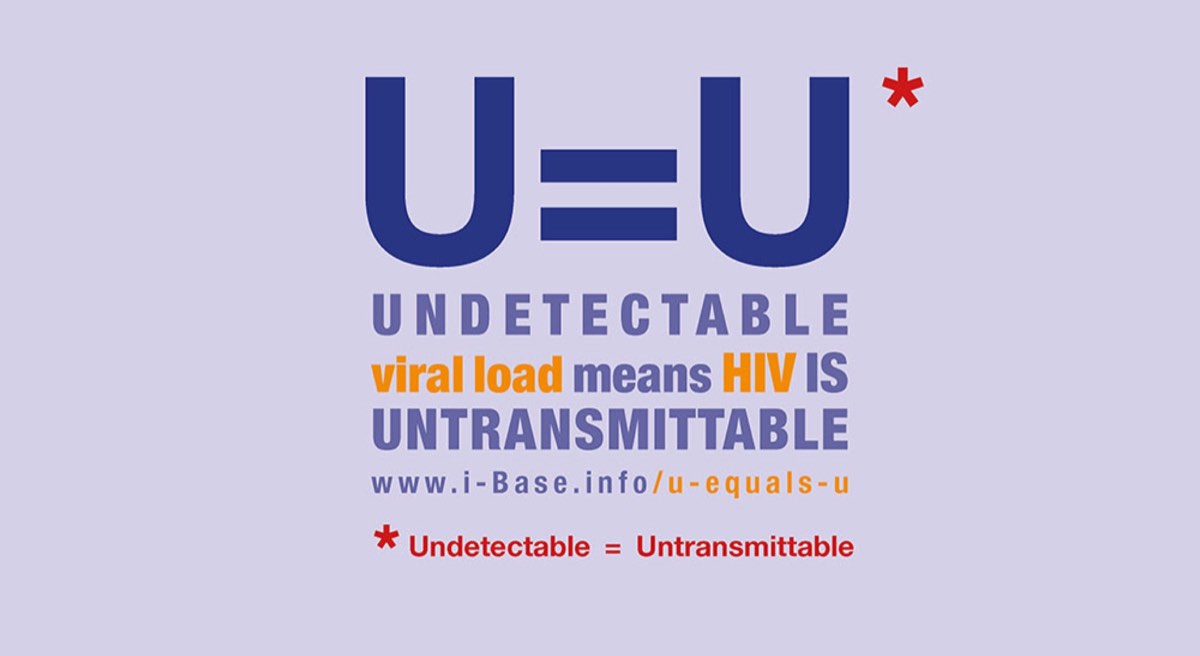
“...people with HIV who have taken antiretroviral drugs for more than 6 months and the virus cannot be detected in their blood, that person will not be able to pass the infection on to others...”
In medicine, this process is called U = U, where the first U stands for Undetectable and the second U stands for Untransmittable (not broadcast), so U = U means that when it cannot be detected (HIV) cannot transmit the infection to others

Education around the world, including Thailand. Data were collected from people living with HIV who took antiretroviral drugs regularly until the virus was undetectable in the bloodstream. and have a partner who is not infected Having sex both with and without condoms with a partner. It was found that
- No additional infections were found from couples who regularly used condoms.
- No additional infections were found from couples who did not wear condoms but regularly took antivirals.
- Infections were found in couples who had sex with others who did not know the blood test results. This means that they are not infected by an infected partner who regularly takes antiretroviral drugs.
...Most people infected with HIV are infected by people who do not know they are infected and do not take protection...

Professor Emeritus Dr. Praphan Panupak Director of the AIDS Research Center The Thai Red Cross Society added that …that infected people take antiretroviral drugs regularly. This makes them safer than people who have never had their blood tested and don't know their blood results. There is no reason for people in society to hate infected people. But everyone should be encouraged to go get a blood test..."
Facts about HIV/AIDS
- HIV (HIV Human Immunodeficiency) Virus)
refers to a type of virus. which, when entering the body, will destroy white blood cells, which are the body's immune system. If there is a large amount of HIV virus The body's immunity will decrease, causing immune deficiency - AIDS (AIDS, an abbreviation for Acquired Immune Deficiency Syndrome)
It is a group of symptoms caused by The body's immune system deteriorates. This is because the HIV virus has entered the body. There will be no immediate symptoms of illness. But it will destroy the immune system over time until it is unable to control or deal with certain germs. It causes opportunistic diseases such as tuberculosis, meningeal fungus, etc., all of which can be cured. - HIV infected people
are people who have received the HIV virus into their body. But the body is still strong. and can live life like a normal person Especially those who regularly take HIV medication. and take care to prevent further infection - AIDS patients are people infected with HIV who are immunocompromised and suffer from opportunistic diseases. These immune deficiencies and illnesses can be cured.
- Immunity refers to self-defense mechanisms. When a foreign substance enters the body which will act to resist or destroy foreign substances By the working system of white blood cells
- Opportunistic diseases Refers to a disease that occurs because the body has an impaired immune system. to the point of being unable to control diseases that generally do not occur in people with normal immune systems, such as tuberculosis and pneumonia PCP(Pneumocystis Carinii Pneumonia) or fungus
- virus load (Viral load) is the amount of virus in the blood. This refers to the amount of HIV in the blood. Having a lot of HIV in the blood may result in a decrease in the CD 4 count (CD 4 is a group of white blood cells that organize the immune system against infections). Infected people who take antiretroviral drugs regularly. It will be found that the number of CD 4 cells increases and the viral load decreases. That is, taking medication regularly will reduce the amount of HIV in the blood.
Transmission of HIV
- Sexual sex Especially sex with unprotected penetration. (with condoms) both vaginal and anal, male to female and male to male (because males and females can have anal sex)
- Contact through blood. which involves sharing drug injection needles with people infected with HIV and infection only passes from the mother (who is infected) to the child. At present, if the mother receives prenatal care and receives continuous HIV antiretroviral medication It will reduce the baby's risk of being infected with HIV. 2%
HIV can be prevented, AIDS can be treated
- Using condoms is a low-cost method of prevention. High efficiency And can prevent other sexually transmitted diseases such as gonorrhea and syphilis, as well as cervical cancer.
- Taking PrEP (PrEP stands for Pre Exposure Prophylaxis) that can prevent HIV. Among those who are not infected but are at high risk But this drug cannot prevent other sexually transmitted diseases
- Other such as Circumcision of the foreskin of the penis Using female condoms (Not yet available in Thailand) etc.

Living with a person infected with HIV
Pop (pseudonym)Revealing the experience of knowing that one's loved one was infected with HIV. Deciding thatafter knowing, decided to give the relationship a chance. Because I saw that Ordinary people know that their boyfriend is infected with HIV. It may not give you the opportunity to continue dating. But he wanted to give his girlfriend a chance by starting to study and find information about HIV and intending to live a normal life with his lover for as long as possible
“...I didn't take any special care of him. Because he takes care of himself well. Take anti-infective medication regularly I think that acting normally and living life as normally as possible is something that doesn't make my boyfriend worry too much..."

Summary
Those who want to know their blood results can contact for free consultation and blood testing for HIV twice a year at any hospital under the National Health Insurance System by showing their ID card. And you can receive free antiretroviral treatment according to your rights. As for youth under 18 years of age, they can receive counseling services and be tested for HIV infection without having to ask for parental consent
'We can live together in society
if we respect and honor each other.'
Illustrations from the internet
Interview by Professor Emeritus Dr. Praphan Panupak, Director of the AIDS Research Center, Thai Red Cross Society
Pop (pseudonym) who lives as a married person with someone living with HIV
Some information from the Office of Risk Communication and Health Behavior Development, Department of Disease Control
Thai Red Cross Society and books What you need to know What he needs to know
Sources
Information updated 24 September 2026.